


Search is not as it was. Enter a question. There aren’t 10 blue links. You get an answer.
It’s the change that has everyone suddenly talking about AEO and GEO. But most people employ these words interchangeably. They’re not.
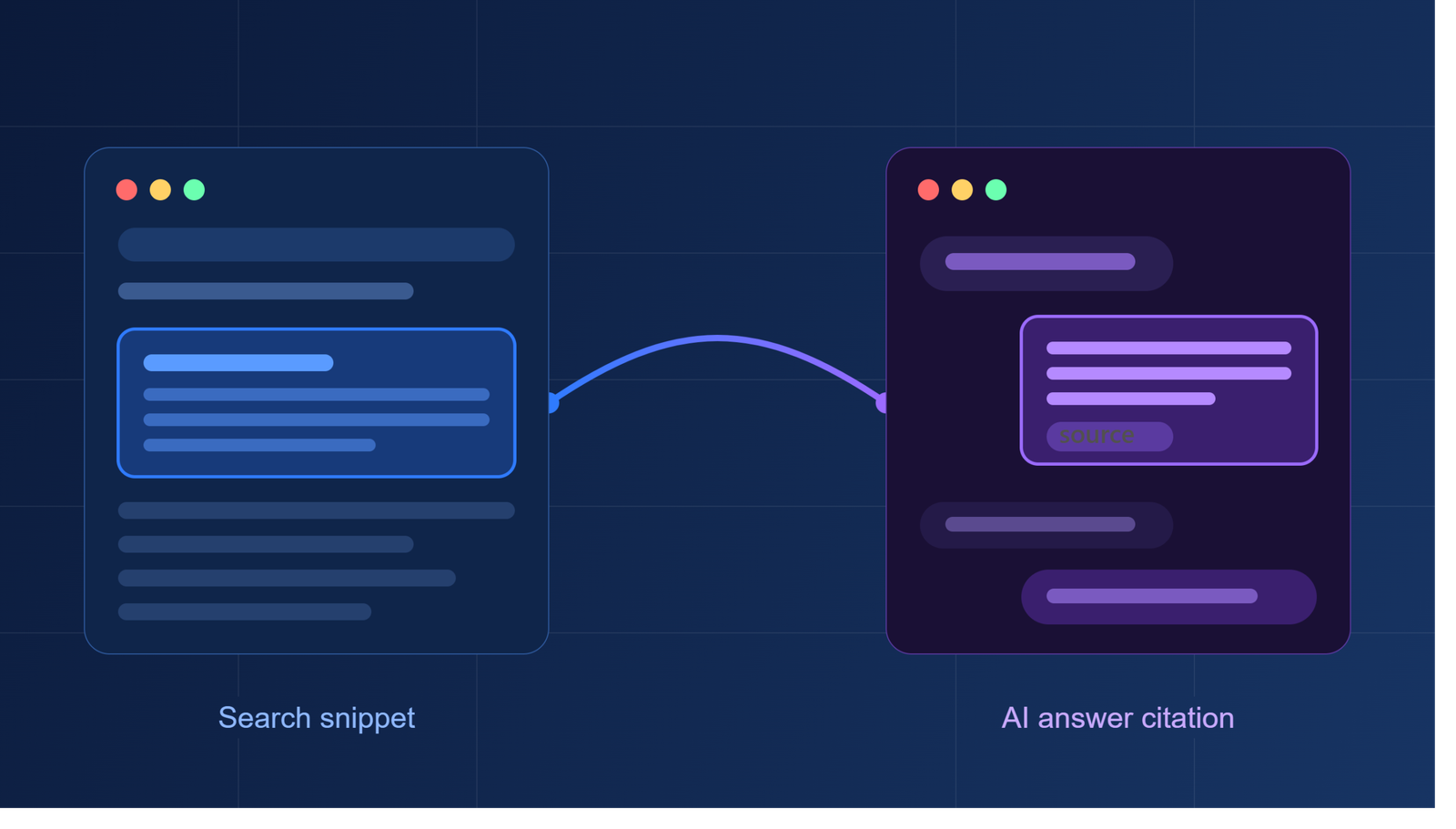
Quick Answer: Answer Engine Optimization (AEO) involves optimizing content to be automatically extracted by search engines for their featured snippets, voice search results, and knowledge panels. Generative Engine Optimization (GEO) is a technique for optimizing content to have it used by AI-generated products, such as ChatGPT, Gemini, or Perplexity, in their answers. AEO is designed to target the traditional search engines. GEO focusses on AI-generated responses. They are both important, but they have different metrics of success, formats and signals.
If you’re only doing one, you’re neglecting the fact that you could be visible.
Why This Matters Right Now
The flow of traffic is being disrupted. Google is answering questions directly on its search results, which is causing CTRs on traditional search results to plummet.
Meanwhile, millions are asking ChatGPT and Perplexity as opposed to Google. Those tools are not clickable. They quote sources, without requiring connections.
If you get either Answer Engine Optimization vs Generative Engine Optimization technique wrong, you will be invisible in two platforms. Do it right and you’re present where your audience is looking.
This is NOT a future issue. This is what is taking place in your analytics dashboard now.
Marketers who don’t have caught up with this change are already losing ground. Each month you don’t plan Answer Engine Optimization vs Generative Engine Optimization is one month a competitor takes your place in the answer box or AI citation.
The good news? There is not a need to start from scratch with either AEO or GEO. The preparation work is similar for most of the grounds. To know where two paths go apart.
What Is Answer Engine Optimization (AEO)?
AEO is a game of winning the “answer box. You should consider thinking about the things that show up as snippets, PUA, voice assistant answers or knowledge panels.
Google bots continue to crawl and index pages. AEO is operating in that system. You’re optimizing for extraction not ranking.
Core AEO Tactics
- Provide direct responses within the first 40-50 words of the text in a section.
- Employ question-style H2s and H3s that coincide with actual search queries.
- Organise content using lists, tables and numbered steps.
- Use schema markup (FAQ, HowTo, Article) for correct parsing by engines.
- Keep answers concise. Snippets don’t reward length.
What Is Generative Engine Optimization (GEO)?
Generative engine optimization is new and it has a different set of rules. You’re not optimizing for a ranking algorithm. You are optimizing for the AI model to cite or summarize from.
Unlike search engines, large language models aren’t going to crawl the web in real time. Most of them will take content from indexed web data, some of them will have to deal with live retrieval, but all of them will prefer clear, well-attributed, well-structured content that can be easily retrieved cleanly.
Imagine you were composing for the intern who reads every word you write literally and reads every book you’ve ever written… in its entirety. It does not pay for hype of any sort. It praises facts it can pick up easily and assign accurately, without making educated guesses.
Core GEO Tactics
- Write in a manner that allows for accurate and easy quoting and summarization.
- Support claims using data, statistics and named sources.
- Avoid vague pronouns and use descriptive names of people, tools, brands, etc.
- Share new findings or data that is not available from other sources.
- Stay consistent with your brand throughout the website (forums, reviews, docs).
That’s a fact about most websites that you won’t find in a guide: AI models pay attention to consistency across the web, not just your page. When your brand exclusively discusses a topic on their own blog, then GEO performance remains low. Third party mentions are more important for this type of SEO than it is for classic SEO.
Second insight: GEO favors a structured clarity over keyword density. Filling your main keyword doesn’t benefit an LLM’s citation. In fact, it hurts, generating models frown on repeating the same low information content phrase when picking sources to summarize.
Thirdly, and a point that people don’t often talk about, freshness is treated differently here. Recently updated pages are rewarded by search engines. LLMs are trained using snapshots or periodic crawls, so a page that was right 6 months ago may not be correct in an AI’s response. Keep updated those pages that are data intensive, not just when traffic slows.
Common Mistakes That Kill Your Visibility
The main reason most teams fail is that they don’t try hard enough. They only have one playbook for both channels and that’s why they end up failing.
Mistake 1: Treating GEO like traditional SEO
Here keyword density and backlinks are not a big deal. Clean data, credible and citations are more important.
Mistake 2: Ignoring off-site presence
GEO models are not limited to your domain, but to the entire web. No one else mentions your brand and the model is blind to you.
Mistake 3: Writing answers too long for extraction
Concise, quotable chunks are rewarded in both AEO and GEO. A 300-word paragraph won’t be clipped or cut down into a snippet or a chat response.
Mistake 4: Skipping schema markup
Structured data is a straightforward yet powerful way to communicate the meaning of your content to search engines and AI crawl bots in seconds.
By avoiding the four mistakes described above, you’ve got an edge over many competitors still deciding between Answer Engine Optimization vs Generative Engine Optimization.
Answer Engine Optimization vs Generative Engine Optimization: Side-by-Side Comparison
| Factor | AEO (Answer Engine Optimization) | GEO (Generative Engine Optimization) |
| Target Platform | Google, Bing, voice assistants | ChatGPT, Gemini, Perplexity, Claude |
| Goal | Win featured snippets, PAA, voice answers | Get cited or summarized in AI responses |
| Primary Signal | Schema, structure, concise answers | Clarity, authority, data, entity consistency |
| Content Format | Short answers, lists, tables | Well-sourced, quotable, fact-dense paragraphs |
| Ranking Mechanism | Search engine algorithm | LLM retrieval and summarization |
| Traffic Result | Click-through possible via snippet link | Often zero-click, brand mention only |
| Measurement | Search Console, snippet tracking tools | AI citation tracking, brand mention tools |
| Update Frequency | Algorithm updates (monthly-ish) | Model retraining (less predictable) |
This table alone proves that Answer Engine Optimization vs Generative Engine Optimization is a bad idea. They should have their own playbooks.
How to Build a Combined AEO + GEO Strategy
There’s no need to make a selection. Most content that is successful these days does both. Here’s the workflow.
Step 1: Structure for Extraction
Have an answer for each section right at the beginning. Wait till later to preserve the nuance. The pattern is preferred by both search engines and LLMs.
Step 2: Add Proof, Not Just Claims
Cite a stat. Name a source. The fact that the advice is generic doesn’t resonate with AI models that are searching for authoritative information.
Step 3: Use Schema Markup
Traditional AEO is assisted by FAQ schema and HowTo schema. They additionally supply an uncluttered and organized signal for LLMs to decipher.
Step 4: Build Brand Consistency Off-Site
Have a positive review, comment, and rating from review sites, forums and comparison sites. GEO is looking for brands that are consistently visible on the web, from owned media to others.
Step 5: Track Both Channels Separately
Search Console will let you know of snippet wins. Google Analytics will not track LLM mention so you’ll need to use an external AI-citation tracking tool to track the mentions for GEO.
Step 6: Audit Quarterly, Not Annually
Both channels are fast moving. Search algorithms are continually updated and AI models are continuously retrained on new data, year-round. A page that has been featured a quarter ago can lose a featured position over night.
Schedule a recurring calendar reminder for every 3 months. Take a quick look at your top pages to verify they still have snippets assigned, then use a quick search in ChatGPT or Perplexity to check if they’re still being cited. Otherwise, it’s time to make some changes to your data, refresh your sourcing and streamline your structure.
It’s one habit that makes brands stick to the top of the mind and others disappear after a first exposure.
This is where the platform such as Goodie will prove to be beneficial. Rather than using five separate tools, it monitors the performance of snippets and AI citations in one dashboard – you’re not flying blind on either channel.
Frequently Asked Questions
Is GEO taking the place of AEO?
No. They’re running in parallel. Sure, traditional search is still generating lots of traffic, so AEO isn’t going anywhere anytime soon.
Do I need to have different content for AEO and GEO?
Not always. Well-structured, well-sourced content tends to work well in both. However, GEO should be better validated by a third party to be effective.
Which one is more popular?
AEO generally gets more clicks. GEO can create brand awareness and establish trust, many times without any click.
How do I know if I’m successful with GEO?
Use citation-tracking tools to see the results of brand mentions that traditional analytics tools won’t reveal in AI-generated answers.
Is it possible for small brands to compete in GEO?
Yes. LLMs give preference to content that is well-researched and offers a clear value proposition, rather than just top-notch domain authority, providing an equal opportunity platform for smaller sites that have solid data.
Do you have to rewrite old content for AEO and GEO, or do you have to create new content?
Rewrite first. The majority of pages that don’t perform well already have a good topic, but weak structure. Before making something up, write direct answers, schema, and sourcing.
How long does it take for GEO results to be implemented?
Most brands witness changes in citations within 4-8 weeks of content restructure and off-site mentions.
Win Both Channels, Starting Today
You don’t need to pick a side in the Answer Engine Optimization vs Generative Engine Optimization debate. You need a system that handles both.
Organize your material for extraction. Support every statement with accurate information. Connect your brand consistently on the web, everywhere – not just your website.
Nowadays there’s no choice but to use both channels. The volume is still there with search. AI answers generate the trust because users feel it is a curated recommendation and not an ad.
Brands appearing on both lists have two chances to win – one when they click and another when they are cited. Brands that only pursue one are risking falling for one channel that may die anytime soon.
Start small. Choose the top 5 pages that are visited most often. Rewrite top part for direct answers. Include one strong Data Point on each page. After a month, come back and see which pages begin to appear in the automated answers.