What Is Inter loT? The Future of Interoperability In Ai Devices 2026
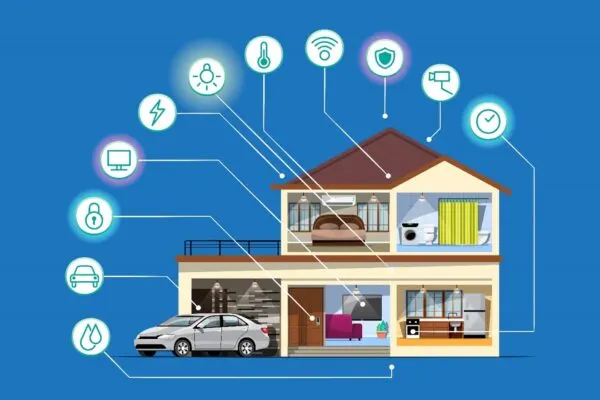
The Internet of Things (loT) is revolutionizing our lives and has spawned new smart homes, cities, and industries that interrelate billions of devices. However, with the increase in the volume of devices and platforms, one of the biggest challenges has emerged, and that is interoperability in IoT devices. Devices from different manufacturers that are operating on various platforms often can’t talk to each other. The solution? Inter IoT is a new standard that promises to unite and streamline the way our smart world works.
In this article, we’ll explore what Inter IoT is, how it works, and why it’s the future of device connectivity. We’ll also cover inter IoT platforms, inter IoT architecture, IoT device communication protocols, the Inter IoT project, smart device interoperability solutions, IoT interoperability standards 2026, how Inter IoT works, and the best IoT platform integration tools.
TOC
Table of Contents
What Industries Can Benefit is Inter IoT 2026?
Inter IoT is used for Interoperable Internet of Things. It includes the structure, norms, and technology that enable the communication of various IoT gadgets, platforms, and networks.
They work together, regardless of their manufacturer or underlying technology. Ahead of the limitations of smart devices, Inter IoT platforms enable smooth data exchange and unified control.
Why Is Interoperability in IoT Devices So Important?
There is no interoperability in IoT devices, which implies that users and businesses are stuck within the same vendor or a platform with low flexibility and innovation. Think about a smart house with the lights, thermostat, and security system not being interactive because they belong to different brands.
Or a smart city where traffic sensors can’t share data with public transport systems. Inter IoT solves this by enabling true cross-platform collaboration.
Key benefits of Inter IoT include:
The main advantages can be seen as:
- Getting rid of vendor lock-in, Fueling.
- Flexible and big IoT ecosystems.
- Creating innovation with the help of cross-platform apps.
- Cut in costs and Complexity.
Inter IoT Architecture: The Foundation of Connectivity
The inter-IoT architecture is designed as a multi-layered system that enables devices, networks, and applications to work together, regardless of their differences.
1. Device Layer
Inter-IoT platforms connect sensors, actuators, and gateways from different brands or manufacturers that we see in IoT device communication protocols like Zigbee, Bluetooth, and LoRaWAN.
2. Network Layer
This layer ensures that data can move smoothly between devices using different IoT device communication protocols. It supports hybrid networks and protocol translation.
3. Middleware Layer
Here, smart device interoperability solutions like semantic mediators and service discovery tools harmonize data formats and manage device interactions.
4. Application Layer
Cross-platform apps can access and control devices from multiple ecosystems, thanks to the unified inter-IoT architecture.
5. Data & Semantics Layer
In this layer, data formats and ontologies are standardized so that data coming out of any device is comprehensible in the system.
IoT Device Communication Protocols: The Language of Devices
A core part of interoperability in IoT devices is the use of standard IoT device communication protocols. Some of the most important include:
- MQTT: MQTT is lightweight and works well with low bandwidth.
- CoAP: Works best with constrained devices.
- LoRaWAN: Enables long-range and low-power communication requirements.
- HTTP/2: Supports concurrent data streaming.
By supporting multiple protocols, inter-IoT platforms can connect virtually any device.
The Inter IoT Project: Pioneering Interoperability
The Inter IoT project is a leading European initiative aimed at creating open, vendor-neutral frameworks for IoT interoperability. It has developed key tools such as:
- Virtual GW: For device-layer interoperability.
- INTER-MW: Middleware for cross-platform service discovery.
- IPSM: Semantic mediator for harmonizing data formats.
Real-world applications include smart device interoperability solutions in logistics, healthcare, and smart cities.
Smart Device Interoperability Solutions: Real-World Impact
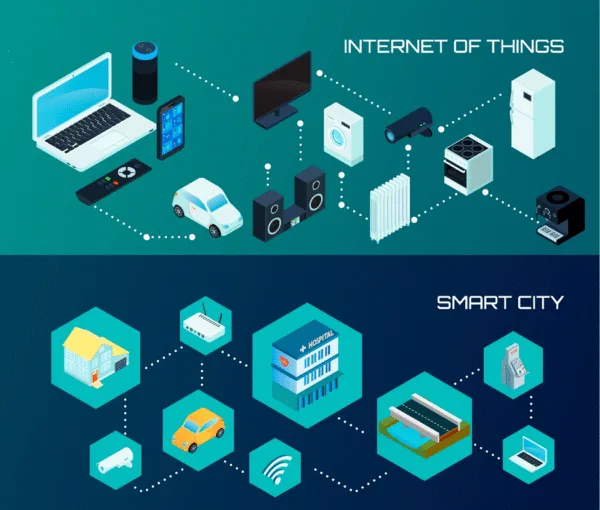
Smart device interoperability solutions are already transforming industries:
- Smart Homes: Thermostats, security systems, and lights of various brands are controlled with the help of the same app.
- Smart Cities: Combine street traffic, weather, and public transport information to promote urban management.
- Healthcare: Consolidate patient records on wearables, devices in the hospital, and electronic records.
These solutions are made possible by robust inter-IoT architecture and advanced IoT platform integration tools.
IoT Interoperability Standards 2026: The Road to Universal Compatibility
Looking ahead, IoT interoperability standards 2026 are set to accelerate the adoption of inter IoT platforms. Key standards include:
- IEEE P2668: This is a universal interoperability standard still under development.
- OCF (Open Connectivity Foundation): Encourages interoperability within cross-vendor.
- W3C Web of Things (WoT): Standardizes IoT metadata and related APIs.
These standards ensure that future devices and platforms will be “born interoperable.”
How Inter IoT Works: Step-by-Step
Here’s how Inter IoT works in practice:
- Device Registration: A new sensor connects to an inter-IoT platform via a gateway.
- Protocol Translation: The gateway translates the protocol used in the device to a standard protocol, i.e., LoRaWAN to MQTT.
- Data Harmonization: The data format is customized with middleware tools.
- Service Discovery: The platform identifies compatible applications and services.
- Cross-Platform Execution: Apps use the device’s data, regardless of its original platform.
IoT Platform Integration Tools: Building the Future
Modern IoT platform integration tools make inter-IoT architecture possible. Popular examples include:
- IoTivity: Device discovery and integration.
- AWS IoT Greengrass: Edge and protocol translation.
- Azure IoT Hub: Cloud-based service for devices.
- Kura: Edge automation and gateway management.
With all these tools, businesses are enabled to scale and become future-proof and flexible IoT ecosystems.
The Future of Inter IoT: What’s Next?
By inter IoT platforms and IoT interoperability standards, 2026 will be the backbone of smart environments. Expect:
- 5G-powered real-time interoperability
- AI-driven data harmonization
- Blockchain-secured device interactions
Businesses that embrace IoT architecture and invest in smart device interoperability solutions will lead the next wave of digital innovation.
1. IoT Definition and Examples
IoT (Internet of Things) is a smart connected ecosystem of devices, sensors, machines, and appliances that communicate data automatically without constant human control. This improves speed, accuracy, and real-time enterprise decision-making.
IoT blends hardware + connectivity + cloud + analytics to automate operations at scale — reducing manual work, operational cost, and inefficiency.
Examples: include Amazon Alexa, Google Nest, Philips Hue smart home systems, healthcare wearables like Apple Watch, connected vehicles like Tesla, industrial IoT for predictive maintenance, and precision farming sensors in agriculture.
2. IoT Examples
IoT real-world examples exist across home, business, healthcare, industrial, agriculture, and public infrastructure sectors. Smart homes use Amazon Echo, Google Nest Hub, Philips Hue, and Ring Doorbells to automate energy control, voice commands, and security monitoring.
Healthcare uses IoT wearables like Fitbit and Apple Watch for vitals tracking and proactive diagnostic support. In agriculture, IoT solutions like CropX monitor soil moisture + weather to optimize irrigation and reduce crop damage. Connected vehicles like Tesla use IoT data to improve navigation, performance, and safety.
Logistics uses IoT GPS trackers for shipment location & condition tracking. Retail uses IoT smart inventory systems for accurate stock control. Industrial IoT (IIoT) enables predictive maintenance, asset health monitoring, waste reduction, and lower downtime — while smart cities use IoT sensors for traffic efficiency, energy optimization, and environmental management.
3. IoT Applications
IoT applications impact every industry — healthcare, smart cities, industrial automation, transport, retail, energy, and home environments. IoT changes how systems operate by making data actionable, automating, and real-time.
Healthcare uses IoT for connected medical devices, remote patient monitoring, + smart hospital operations. Smart cities use IoT for traffic control, street lights automation, waste management, + air quality tracking. Agriculture uses IoT sensors for precision farming, irrigation efficiency, and fertilizer optimization.
IoT improves manufacturing through predictive maintenance, asset tracking, and quality auto-monitoring. Transportation uses connected vehicle systems for navigation, fleet control, and predictive repairs. Retail uses IoT for smart inventory and customer behavior data. Energy companies use IoT smart grids, auto metering, and optimized power distribution. IoT everywhere increases efficiency, reduces costs, and enhances user experience.
4. Characteristics of IoT
IoT characteristics define how connected devices communicate and deliver value. The core characteristic is connectivity – devices interact through the internet or secure private networks to exchange data seamlessly.
IoT systems also feature automation, remote control, sensing capabilities (temperature, motion, humidity, etc.), real-time data processing, and interactive dashboards, which enable smarter, faster operational decisions with very minimal human involvement.
Scalability, efficiency, and strong security are also key IoT characteristics. Systems can grow without performance loss, devices consume optimized power, and sensitive data is protected across all connected environments.
5. Advantages of IoT
IoT delivers major advantages by increasing efficiency, automation, and real-time decision-making across industries and daily life. Businesses reduce manual work, improve accuracy, and operate faster because IoT devices constantly monitor, capture, and act on live data.
IoT lowers costs with predictive maintenance, reduces downtime, supports energy saving in smart homes, improves fleet + supply chain transparency, and enhances healthcare through remote patient monitoring + early alerts. IoT also improves safety with connected surveillance and smarter security layers.
Overall, IoT drives higher performance, cost optimization, and better customer experience, making it a core force powering digital transformation, Industry 4.0, enterprise modernization, and intelligent smart environments globally.
FAQs
Q1. What is a neural network?
A neural network is an AI model that learns patterns from data by processing information through connected neuron-like layers similar to the human brain.
Q2. What is an intelligent agent? Definition?
An intelligent agent is a system that senses its environment, makes decisions automatically, and takes actions – used in autonomous vehicles, robotics, and finance AI.
Q3. What is IoT security?
IoT security protects connected devices, data transmission, and communication networks from cyber attacks, unauthorized access, and operational disruption.
Q4. What does IoT stand for in computers?
IoT stands for Internet of Things.
Q5. What are the 4 types of IoT?
The four main types of IoT are Consumer IoT, Commercial IoT, Industrial IoT (IIoT), and Infrastructure IoT.
Q6. What exactly does IoT mean in 2026?
What is the Internet of Things (IoT)? The term IoT, or Internet of Things, refers to the collective network of connected devices and the technology.
Conclusion
Inter IoT is the future of the vast connected world. When we have genuine interoperability in IoT devices, we will be able to tap the whole potential of smart homes, cities, and industries. One can take endless applications of performing robust inter-IoT platforms and the latest IoT device communication protocols.
The future that may be predicted today is visionary projects such as the Inter IoT project and changing IoT interoperability standards in 2026. When you plan to construct or deploy IoT systems, it is time to learn about how Inter IoT works and utilize the most effective IoT platform integration tools towards your requirements.